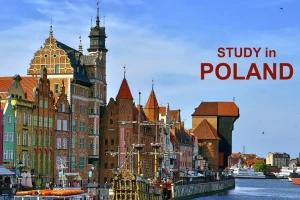
Studying in Poland is one of the most attractive options for international students because of its relatively affordable tuition fees, high-quality education system, and wide range of scholarship opportunities. However, many students do not fully understand how scholarships in Poland work, who is eligible, and how to successfully apply.
This guide explains everything you need to know about getting a scholarship in Poland, including the types of scholarships available, eligibility requirements, and step-by-step strategies to improve your chances of approval.
Overview of Scholarships in Poland
Scholarships in Poland are offered by different sources, including:
- The Polish government
- Universities in Poland
- International organizations
- Foreign partner governments
- Private foundations and exchange programs
These scholarships are available for:
- Undergraduate students (Bachelor’s degree)
- Postgraduate students (Master’s degree)
- Doctoral (PhD) candidates
- Exchange and short-term study programs
One unique feature of the Polish scholarship system is its diversity. There is no single centralized scholarship system; instead, opportunities are spread across multiple institutions, and each one has different rules, deadlines, and funding structures.
Because of this, students must actively search and apply early.
Who Can Apply for Scholarships in Poland?
Scholarships in Poland are open to several categories of students:
- Students of Polish descent
- International students from EU and non-EU countries
- Students with disabilities (in some programs)
- Students with strong academic performance
- Students from developing countries (in selected programs)
However, eligibility depends heavily on the specific scholarship program. Some are open globally, while others are limited to certain countries or academic fields.
Types of Scholarships in Poland
Below are the major scholarship opportunities available to students who want to study in Poland.
1. Scholarships Through Bilateral Agreements
These scholarships are based on agreements between the Polish government and other countries.
In most cases:
- Either the Polish government or the partner country funds the scholarship
- Tuition fees may be fully or partially covered
- Monthly stipends may be provided depending on the program
The value of the scholarship depends on:
- Level of study (Bachelor’s, Master’s, PhD)
- Field of study
- Agreement terms between countries
Students are strongly advised to check whether their home country has a scholarship agreement with Poland. Many governments offer exchange or sponsored study programs that include Poland as a destination.
A useful resource for official recognition and exchange information is the Bureau for Academic Recognition and International Exchange (BUWiWM), which provides guidance on academic equivalence and scholarship opportunities.
2. CEEPUS Exchange Programme
The CEEPUS Programme is a regional academic exchange initiative involving 16 Central and Eastern European countries.
Key features include:
- Tuition fee exemption for exchange students
- Monthly financial support provided by the host country
- Short-term academic mobility (usually 1 semester or more)
- Opportunities for cultural and academic exchange
This program is especially useful for students who want international exposure without the high cost of tuition.
3. Eastern Partnership and Post-Soviet Scholarships
The Konstanty Kalinowski Foundation offers scholarships for students from specific Eastern European countries, particularly Belarus.
These scholarships cover:
- Bachelor’s degree programs
- Master’s degree programs
- PhD studies
Benefits often include:
- Tuition fee coverage
- Monthly living allowance
- Support for relocation and integration
This program mainly supports students facing political or educational barriers in their home countries.
4. Scholarships for Developing Country Citizens
The Polish government also provides scholarships for students from developing countries, especially those pursuing advanced degrees such as PhDs in technical and scientific fields.
These scholarships may include:
- Full or partial tuition coverage
- Monthly stipends
- Research funding support
The goal is to promote academic collaboration and technological development between Poland and developing nations.
5. Fulbright Program
The Fulbright Program is one of the most prestigious international exchange programs in the world.
It allows academic exchange between Poland and the United States, including:
- Students
- Researchers
- Teachers
- Professors
- Professionals
Benefits include:
- Full or partial funding
- Research and academic training opportunities
- Cross-cultural academic exchange
The program is administered through the Polish-American Fulbright Commission and is highly competitive.
6. Visegrad Scholarship Program
The Visegrad Scholarship Program supports students from Central and Eastern Europe.
It offers:
- 1 to 4 semester scholarships
- Master’s and post-graduate study funding
- Regional academic mobility
This program is managed by the International Visegrad Fund and encourages cooperation among countries in the region.
General Requirements to Get a Scholarship in Poland
While each scholarship has specific rules, there are general requirements that most applicants must meet.
1. Academic Qualification
Students must first:
- Complete secondary education for undergraduate admission
- Hold a valid Bachelor’s degree for Master’s programs
- Hold a Master’s degree for PhD applications
Academic performance plays a major role in selection.
2. Language Requirements
Depending on the program:
- Some courses are taught in English
- Others are taught in Polish
You may need:
- IELTS or TOEFL for English programs
- Polish language certification for Polish-taught programs
3. Document Verification (Nostrification)
Foreign qualifications must be officially recognized in Poland through a process called nostrification.
This ensures:
- Your certificates are valid
- Your previous education matches Polish academic standards
Without this step, your application may be rejected.
4. Legal and Immigration Requirements
To study in Poland, students typically need:
- A valid student visa
- A medical certificate (in some cases)
- Proof of acceptance into a university
Step-by-Step Guide to Getting a Scholarship in Poland
Here is a simplified process to improve your chances:
Step 1: Research Available Scholarships
Look for scholarships based on:
- Your country
- Your field of study
- Your academic level
Step 2: Choose a University or Program
Apply to Polish universities first because most scholarships require admission before funding is awarded.
Step 3: Prepare Documents
Common documents include:
- Academic transcripts
- Passport
- CV or resume
- Motivation letter
- Recommendation letters
- Language test results
Step 4: Apply Early
Deadlines vary, so early application increases your chances significantly.
Step 5: Apply for Multiple Scholarships
Do not rely on just one program. Apply to:
- Government scholarships
- University scholarships
- Exchange programs
Step 6: Attend Interviews (if required)
Some scholarships require interviews or additional assessments.